An Incredibly Small Space to Pass Through:
On Metaphor, Relation, and the Resonant Murk
“you just have to let the soft animal of your body love what it loves”
and also
“don’t love your life too much”
Mary Oliver, excerpts from Wild Geese and One or Two Things, 1986
An Incredibly Small Space to Pass Through:
On Metaphor, Relation, and the Resonant Murk
“you just have to let the soft animal of your body love what it loves”
and also
“don’t love your life too much”
Mary Oliver, excerpts from Wild Geese and One or Two Things, 1986
An Incredibly Small Space to Pass Through:
On Metaphor, Relation, and the Resonant Murk
“you just have to let the soft animal of your body love what it loves”
and also
“don’t love your life too much”
Mary Oliver, excerpts from Wild Geese and One or Two Things, 1986
An Incredibly Small Space to Pass Through:
On Metaphor, Relation, and the Resonant Murk
“you just have to let the soft animal of your body love what it loves”
and also
“don’t love your life too much”
Mary Oliver, excerpts from Wild Geese and One or Two Things, 1986
An Incredibly Small Space to Pass Through:
On Metaphor, Relation, and the Resonant Murk
“you just have to let the soft animal of your body love what it loves”
and also
“don’t love your life too much”
Mary Oliver, excerpts from Wild Geese and One or Two Things, 1986
An Incredibly Small Space to Pass Through:
On Metaphor, Relation, and the Resonant Murk
“you just have to let the soft animal of your body love what it loves”
and also
“don’t love your life too much”
Mary Oliver, excerpts from Wild Geese and One or Two Things, 1986
An Incredibly Small Space to Pass Through:
On Metaphor, Relation, and the Resonant Murk
“you just have to let the soft animal of your body love what it loves”
and also
“don’t love your life too much”
Mary Oliver, excerpts from Wild Geese and One or Two Things, 1986
An Incredibly Small Space to Pass Through:
On Metaphor, Relation, and the Resonant Murk
“you just have to let the soft animal of your body love what it loves”
and also
“don’t love your life too much”
Mary Oliver, excerpts from Wild Geese and One or Two Things, 1986
An Incredibly Small Space to Pass Through:
On Metaphor, Relation, and the Resonant Murk
you just have to let the soft animal of your body love what it loves
and also
don’t love your life too much
Mary Oliver, from Wild Geese and One or Two Things, 1986
An Incredibly Small Space to Pass Through:
On Metaphor, Relation, and the Resonant Murk
you just have to let the soft animal of your body love what it loves
and also
don’t love your life too much
Mary Oliver, from Wild Geese and One or Two Things, 1986
An Incredibly Small Space to Pass Through:
On Metaphor, Relation, and the Resonant Murk
you just have to let the soft animal of your body love what it loves
and also
don’t love your life too much
Mary Oliver, from Wild Geese and One or Two Things, 1986
An Incredibly Small Space to Pass Through:
On Metaphor, Relation, and the Resonant Murk
you just have to let the soft animal of your body love what it loves
and also
don’t love your life too much
Mary Oliver, from Wild Geese and One or Two Things, 1986
An Incredibly Small Space to Pass Through:
On Metaphor, Relation, and the Resonant Murk
you just have to let the soft animal of your body love what it loves
and also
don’t love your life too much
Mary Oliver, from Wild Geese and One or Two Things, 1986
MORSE PARALIS
I have a longstanding interest in Northern Ecologies, and over the course of the past 4 years, I had the opportunity to live and travel in Finland, Iceland, Canada, Greenland, Norway, and Scotland. The content of the songs in this project represents contemplative practice which took place in these locations, and features many actants, human and otherwise.
The shape of the tales is non-narrative. Different kinds of time are explored and embraced. Tales featured include the gutting and the spoiling of a fish, the ice melting at the shoreline, common wild animals as imagined by friends abroad, and the banality of aging.
The composition of the recorded songs was collaborative—reflecting the situational circumstances of my living conditions, the songs themselves reflecting inquiries into belonging, temporality, and community, through an experience of being unmoored, but still engaged. The recordings were constructed through a combination of on-site and remote sessions, and feature collaborators in Canada, Iceland, and the UK.

Adult Humon (working title)
This is a collection of songs about non-normative relationships, both familial and romantic, to be recorded in a country/western style, following the invented aesthetic of my home town (created in 1912 to encourage tourism to the region). The particulars of these forms (country music, heteronormativity) are constructed, and currently swathed in patriarchy. There is something satisfying about taking on a form sacred to the structure, but with content that undermines its authority. I am nowhere near the first to challenge the conventions of country music (Dolly Parton and Lil Nas X as two great examples).

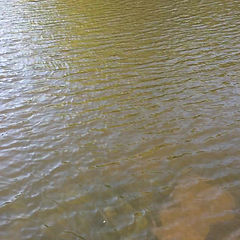

taste of elastic band is on my lip
wet water brings it
the season brings
do we dare to ask for what we want?
do we dare to ask for anything more
when it's the warmth that brings the water
when it's that water brings the shore
when it's that warmth that brings the water
when it's the water brings the land
shape of elastic bring that strength of elastic
when that warmth could fall to anything at all

Blue Hour Compositions (2019)
This work is an experiment in collaborating with a place and a time. On two occasions in two locations (in the Hertoniemie community gardens and at the Soumpu construction site, Helsinki) I improvised along to the place and the hour following the formal setting of the sun, to see what would happen.